

Not every child does their best learning under fluorescent lights at a clinic table. At Naturally Kids, our nature-based occupational therapy sessions move outdoors, where climbing, digging, building and exploring do the work that worksheets can’t.
We work with children who find it hard to sit still, who feel everything is a bit too much (or not quite enough), and who tend to show us who they are through play rather than conversation. Sessions are led by a qualified occupational therapist and shaped around each child’s sensory needs, interests and goals – whether that’s building confidence, settling big emotions, or picking up the motor and social skills that carry into school and everyday life.
Nature-based OT isn’t a replacement for clinical practice – it’s occupational therapy delivered somewhere your child is more likely to engage, try, get it wrong safely, and try again.
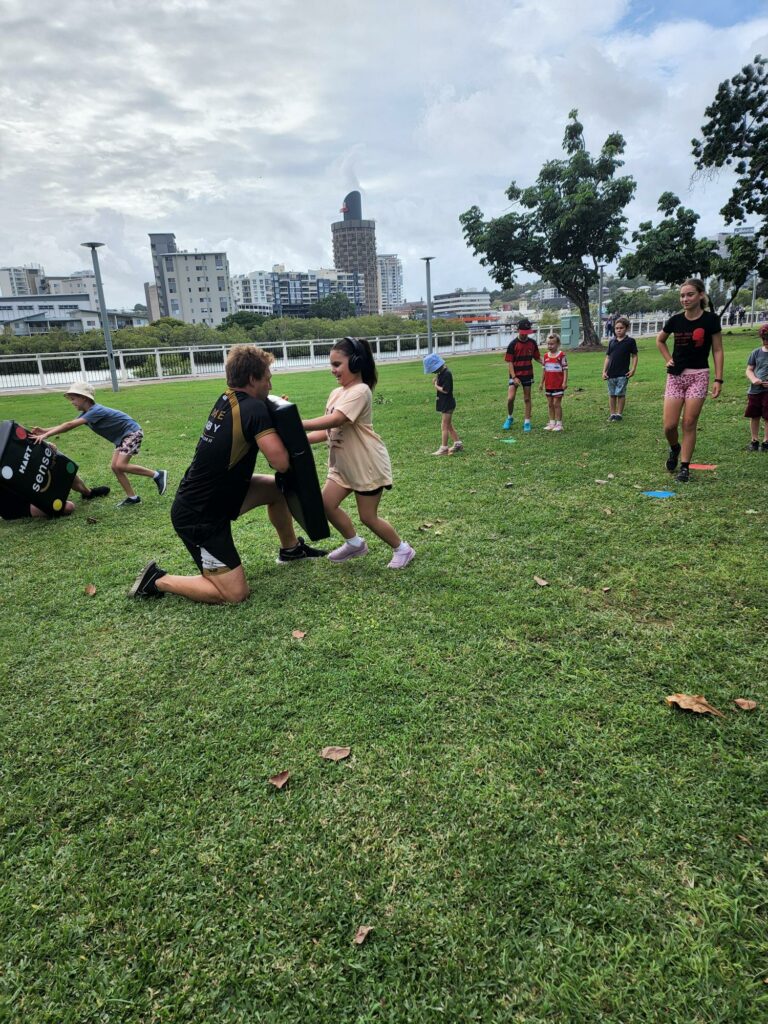
Many of the children we see are seeking sensory input, some avoid it, and plenty do both depending on the day. Nature gives us a bigger, more forgiving space to work with than four walls ever could.
Outdoor environments offer a wide range of sensory experiences in one setting: the deep pressure of climbing and carrying, the balance work of walking a log or swinging, the tactile variety of sand, water, bark and mud, and the calming effect of green space and natural light. Occupational therapy research increasingly points to outdoor and nature-based play as a useful tool for building sensory regulation, because it lets a child’s nervous system self-select the input it needs, rather than have it delivered on a schedule in a therapy room.
In practice, that might look like a child who struggles to sit at a desk finding they can focus for twenty minutes once they’re building a den, or a sensory-avoidant child slowly tolerating messy textures because mud on their own terms feels different to mud on a therapy mat. Your therapist watches for these patterns and adjusts each session around the regulation strategies that work for your child specifically.
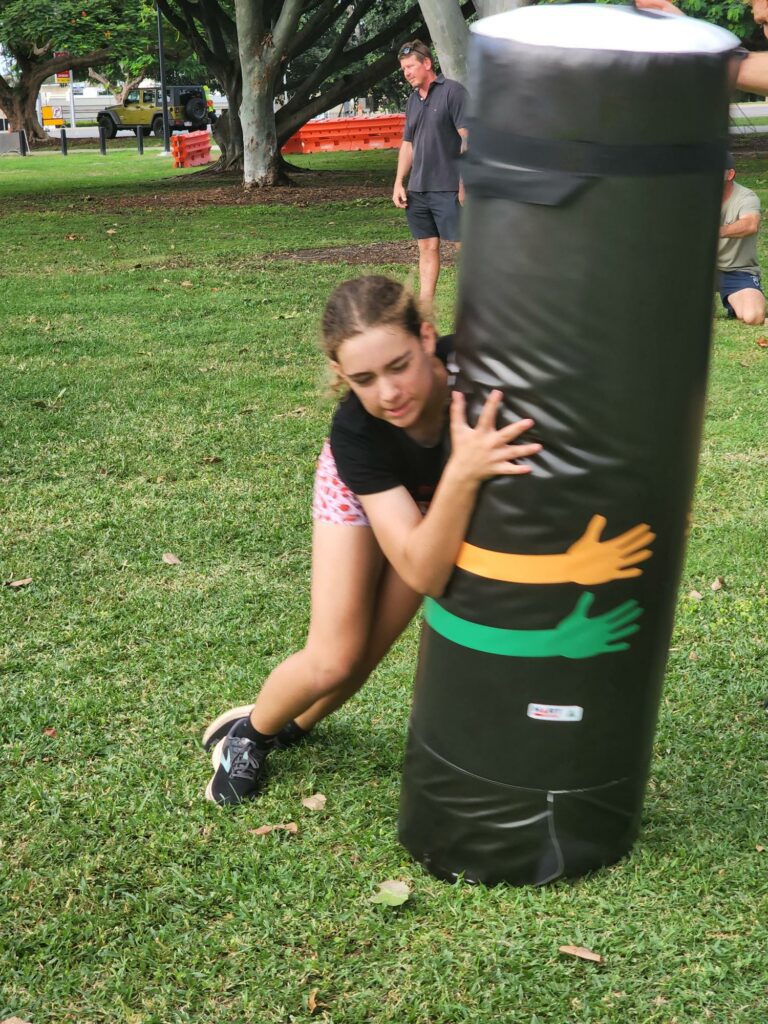
Confidence isn’t something we can hand a child, it’s something they build for themselves, one small risk at a time, and it’s closely tied to how settled a child feels in their body and emotions in the first place.
The outdoors gives children manageable risks to work with: a log to balance along, a knot to tie, a fence to climb, a den that might fall down before it stands up. Each of these is a chance to try something that feels a little bit hard, get it wrong, and have another go, with a therapist alongside them rather than directing from the front.
It also gives children more room to work through big feelings. A lot of what looks like “difficult behaviour” in a clinic or classroom is a child’s nervous system asking for something: more movement, less noise, more control over what happens next. The outdoors can offer all three, and sessions build in the physical activity, sensory breaks and open-ended play that help children settle before we ask them to do anything that requires sitting still or concentrating.
Parents often tell us their child has started attempting new things at school or at home that they’d previously avoided, joining in at the playground, trying a new food, or sitting with a hard task a little longer before walking away from it, alongside being calmer and more settled by the end of a session.
Evidence tells us that time in nature assists children with attention and concentration, gross and fine motor skills, sensory processing, emotional regulation, anxiety, problem-solving, social skills, and the list goes on.
It is intrinsically motivating – it is interesting and rewarding enough to make children want to participate without needing anything else. But, most importantly, it’s fun!
climbing, balancing, crawling and coordination work built into play rather than practised in isolation

Time outdoors is intrinsically motivating for most children in a way a therapy room can struggle to match – there’s no need to convince a child that today’s session is worth their effort, the environment does a lot of that work itself.
Groups add another layer on top of the individual benefits above: children get to practise waiting their turn, negotiating, reading social cues and working alongside peers who understand what it’s like to find some days harder than others. For many families, this social piece (learning and connecting alongside other kids in a low-pressure setting) matters just as much as the individual skill-building. And it’s still fun.

We offer small nature-based occupational group therapy with 2 or 3 children per therapist, where the child is completely immersed in nature to help them reach their goals.
We aim to carry out a therapist-led activity each week. These range from making your own swing to crafts and fishing. With no playground equipment in sight and time for free play at the end, it’s a welcome change from regular indoor therapy sessions.
One of the key elements of the approach is that the natural environment is a genuine contributor (a co-facilitator) in the therapeutic process, not simply indoor therapy taken outside.
Groups run most afternoons at Loam Island in Rasmussen, to allow as many children as possible to take part.
Who it suits: Joey’s Mob generally suits primary-school-aged children who’ll benefit from peer interaction alongside their individual goals. If you’re not sure whether your child’s age or needs are the right match, ask us, we’ll talk it through with you before your child starts.
Getting started: Every child starts with a conversation about their goals, whether that’s through Joey’s Mob, individual sessions, or a combination, so we can recommend the right starting point. From there, sessions run at Loam Island in Rasmussen for groups, or in an environment suited to your child’s individual goals for one-to-one therapy, with your therapist tracking progress and adjusting activities as your child develops.
If your child is on a waitlist elsewhere, already receiving OT, or you’re simply weighing up whether this approach is the right fit, get in touch and we’ll help you work out next steps, or see how our sessions work if you’d like more detail first.

Kymberley is the only occupational therapist in North Queensland certified in the ConTiGO Approach (Connection & Transformation in the Great Outdoors) – a nature-based paediatric OT model used by trained therapists internationally.
The approach is built around three ideas: connection (involving peers, family or caregivers in sessions, so skills carry over into everyday life), transformation (applying evidence-based OT techniques in outdoor settings), and time in the great outdoors itself (unstructured play with natural materials, rather than clinic equipment).
In practice, that means your child’s therapy plan can include the same evidence-based OT techniques used in a clinic, delivered through climbing, building, digging and exploring instead of at a table. Sessions are still built around your child’s individual goals and reviewed regularly – ConTiGO shapes how therapy is delivered, not what your child is working towards.
You can be confident every session is grounded in established OT practice, led by a therapist trained specifically in applying that practice outdoors.